
SLS technology
Selective laser sintering, in PA11 nylon.
110µm
Layer Height
PA11
Nylon Material
100%
Solar Powered
7-10 Days
Working-Day Turnaround
Selective Laser Sintering
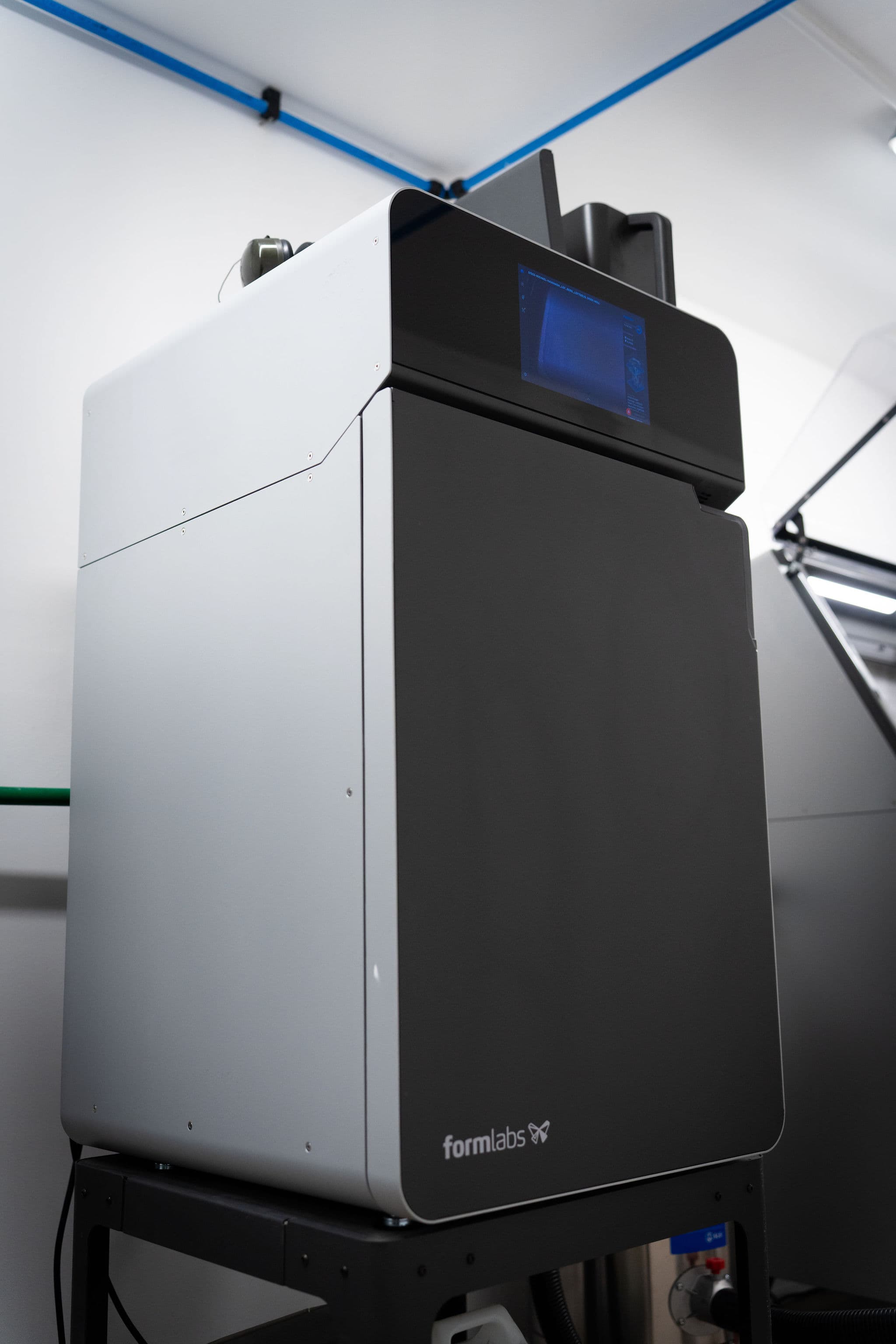
We print on a Formlabs Fuse 1+, a professional selective laser sintering system. SLS (Selective Laser Sintering) works by spreading a thin layer of nylon powder across a build platform, then using a precision laser to fuse the powder particle by particle, layer by layer.
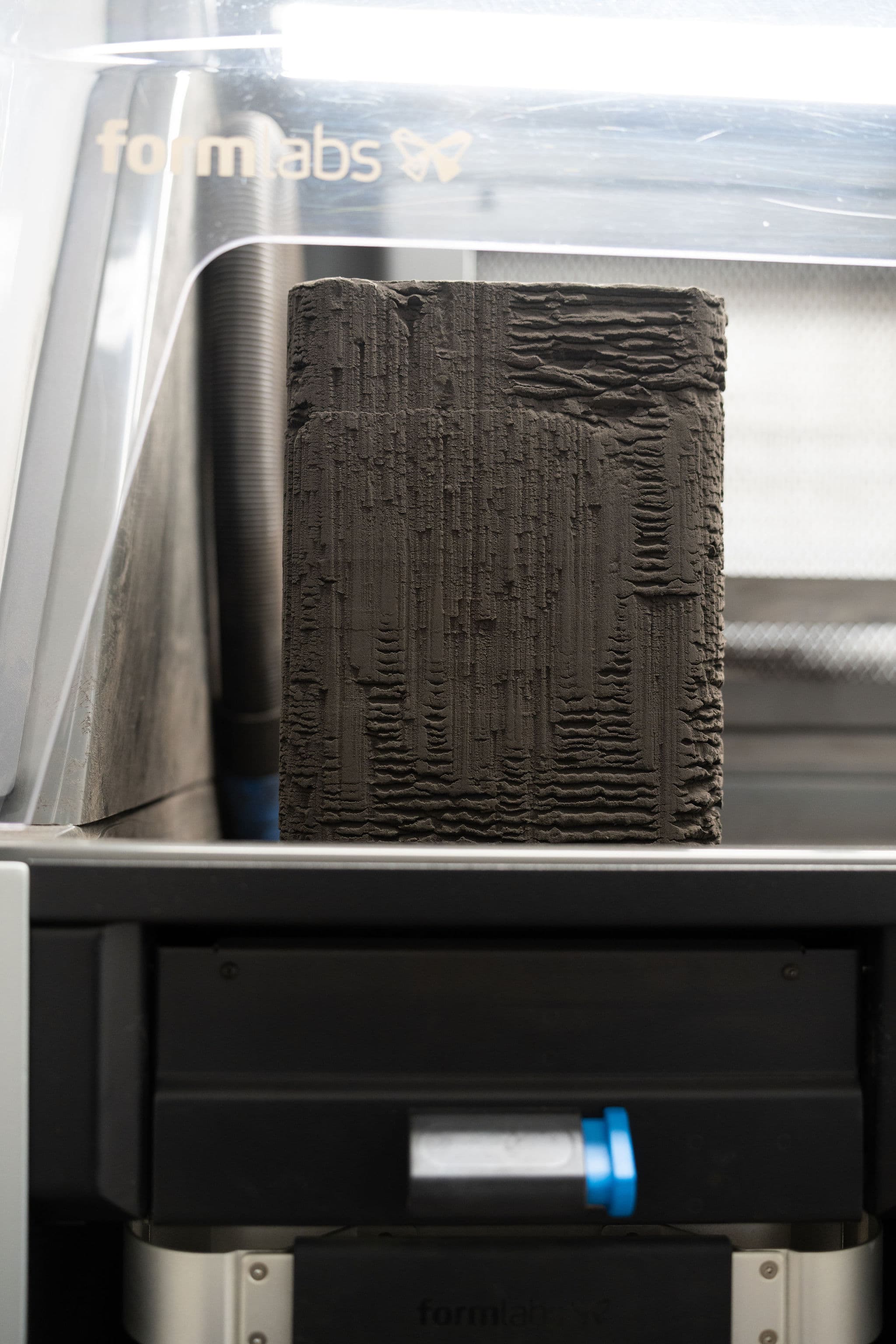
Each layer is 110 microns thick. The surrounding powder supports the part as it builds, so lattice heels, cut-outs and printed posts need no support structures. Unlike vacuum forming, there is no heat-forming step to thin the shell or introduce springback.
Why SLS is Superior
- Design-true geometry: the shell is printed directly from the individual design
- Fused, not extruded: far stronger between layers than FDM printed insoles
- Complex geometries: no tooling constraints, enabling designs impossible with traditional methods
- Repeatable precision: an identical reprint from file, batch after batch
PA11 Bio-Based Nylon
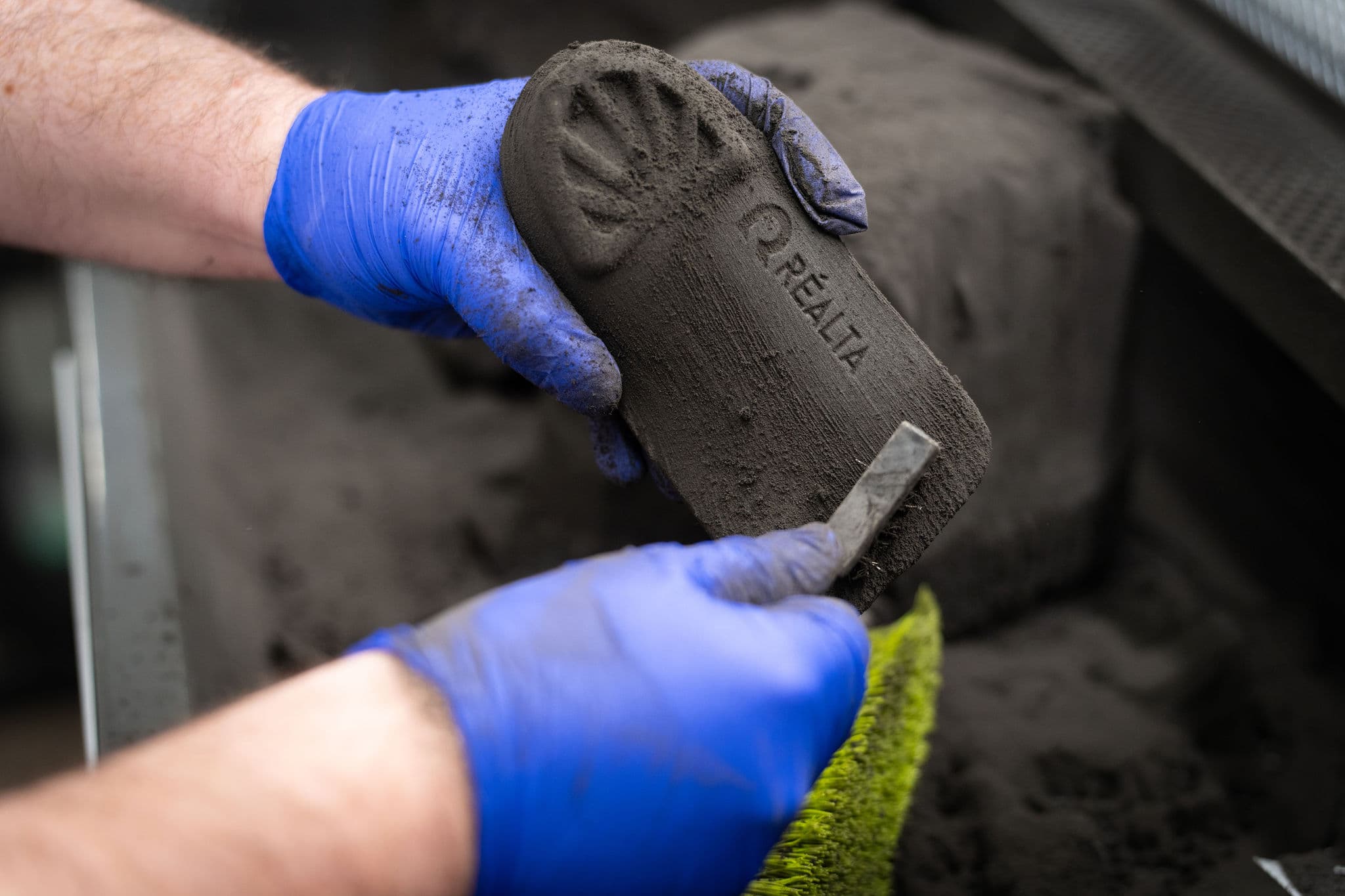
Every Réalta orthotic is printed in PA11, a high-performance, bio-based nylon derived from castor beans. PA11 delivers an exceptional combination of strength, flexibility, and biocompatibility that far surpasses traditional polypropylene.
Material Properties
- High fatigue resistance: maintains performance through thousands of loading cycles
- Excellent flexibility: controlled deflection for dynamic foot function
- Skin-friendly: used under a top cover, with no latex
- Sustainable origin: derived from castor beans, a renewable resource
PA11 vs Polypropylene
Traditional polypropylene orthotics are formed under heat and pressure, which introduces internal stresses and inconsistent thickness. PA11 printed via SLS has uniform density throughout, superior fatigue life, and can be engineered with variable thickness zones for optimised biomechanical performance.
Solar-Powered Production
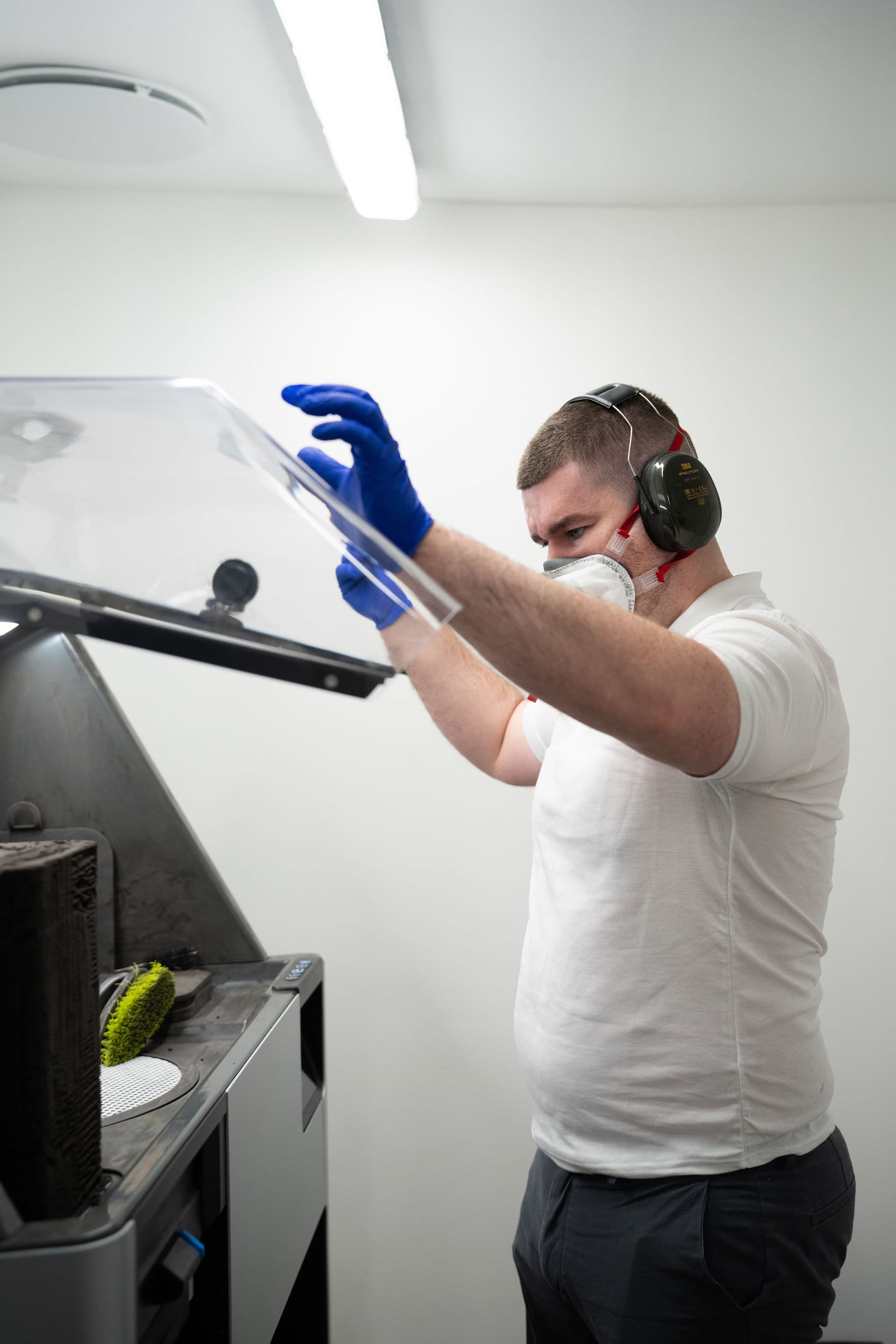
Our entire production facility is powered by 100% solar energy. From the Fuse 1+ printer to the post-processing stations, every stage of manufacturing runs on renewable energy. Combined with our bio-based PA11 nylon, Réalta Labs is committed to delivering zero-carbon orthotics without compromising on quality.
Sustainability isn't an afterthought. It's built into every device we produce.
Prescribe it. We print it exactly.
Open a partner account and send your first scan. Individually designed shells, dispatched in 7-10 working days, with a podiatrist on the other end of every query.